
Irritable Bowel Syndrome and Eating Disorders
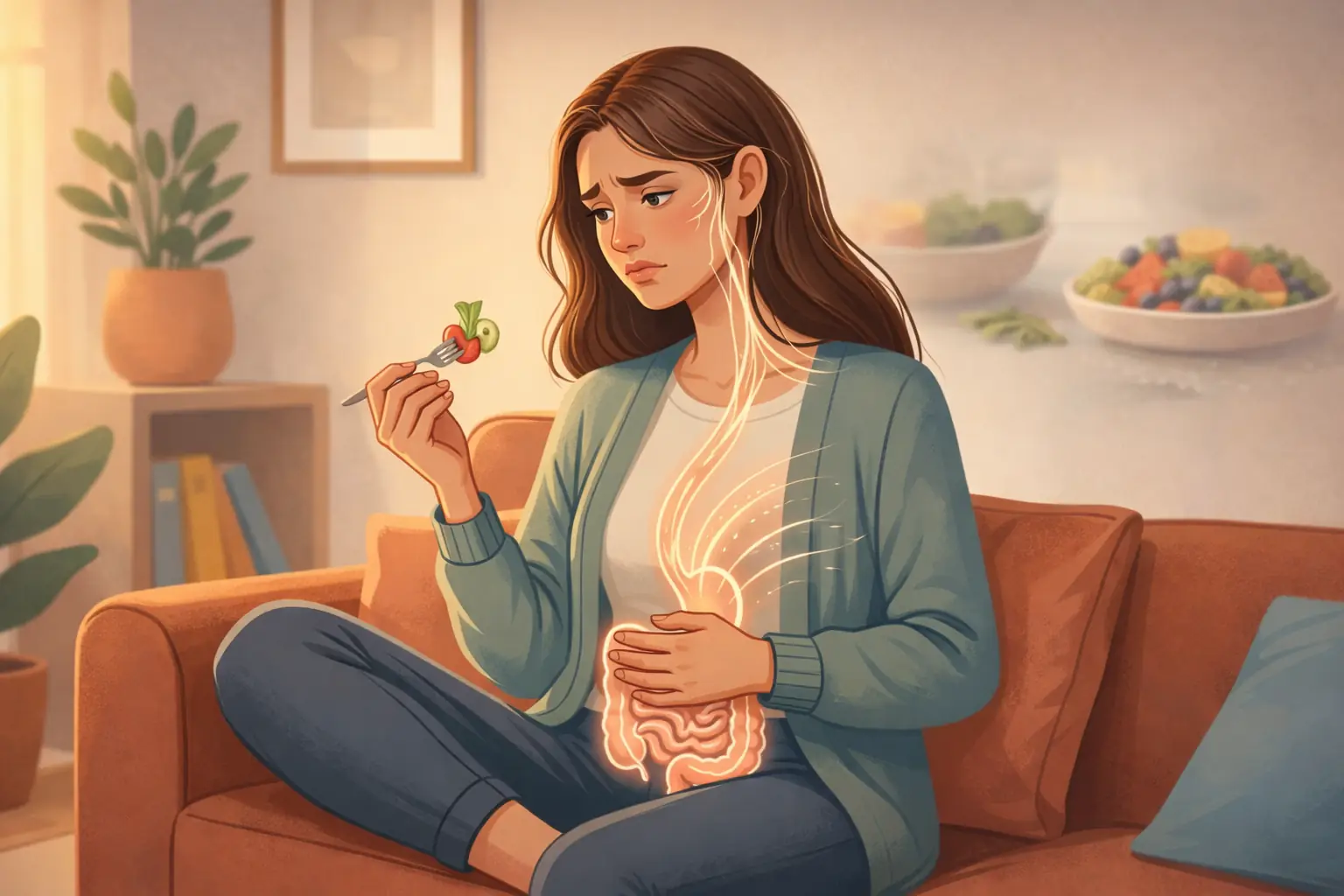
Understanding the overlap, the traps, and why food is rarely the whole story
Eating disorders are surprisingly common, especially among women.1 IBS shows a similar pattern, though of course men are affected too.2, 3 Since both conditions affect people suffering from them basically every day, it’s worth taking a serious look at how IBS and eating disorders are connected, how they interact, and what that means for anyone caught between the two.
I’ve been working with IBS clients since 2021, and I went through my own period of debilitating IBS as well as a mild eating disorder. So, in this article I’ll go through some questions I think are worth asking: can IBS cause eating disorders, can eating disorders cause IBS, what do these conditions share, and how can people actually start to move forward? (NOTE: if you are suffering from an eating disorder, please contact a licensed specialist.)
Article in brief
IBS and eating disorders occur together relatively often and seem to influence one another in both directions.4, 5, 6, 7, 8 Food avoidance tends to build up over time, because IBS symptoms are frightening and unpredictable, and cutting out food feels very logical.7, 8 Stress, especially emotional stress, and poor sleep are also strongly associated with IBS and with worse symptoms.9, 10 The biggest changes often come when people are treated as a whole, instead of looking at just one aspect at a time.
Important to know
If you have an eating disorder, please get proper help for it. This article is intended to help you understand the connection between IBS and eating disorders, and it cannot be used to diagnose or treat either condition.
It’s also worth noting that disordered eating is not the same thing as an eating disorder. Skipping meals, limiting foods, or following restrictive diets can all count as disordered eating patterns, especially when they become regular. What matters is why you’re doing it, how far it has gone, and how much it is affecting your health and your life.7
Some eating disorders involve weight or body-image concerns, while others may involve sensory sensitivity, low interest in eating, or fear of perceived negative effects of eating. Often these cause a lot of physical, psychological and social harm. If you suspect that you or someone you know is dealing with an eating disorder, please see a doctor.
The connection between IBS and eating disorders
The overlap between IBS and eating disorders is bigger than most people expect. IBS prevalence depends heavily on diagnostic criteria: One large review found IBS in about 9.2% of people using the older Rome III criteria, but only 3.8% using the stricter Rome IV criteria. Eating-disorder estimates also vary quite a bit, but one systematic review found lifetime eating-disorder prevalence of 8.4% in women and 2.2% in men, while some more recent estimates have put the number as high as 7.8% in studies from 2013–2018. So yes, eating disorders are common enough that this is not some tiny side issue.1, 2
Another thing to note is that one study found that 64% of people with a current or past eating disorder met Manning criteria for IBS. We also know that people with eating-disorder symptoms are more likely to also have IBS, and that those with IBS tend to restrict their eating or even avoid it more often than those without IBS.5, 7, 14, 15
One big part of this is the gut-brain axis, which is the two-way link between your digestive system and the CNS (central nervous system). When someone’s chronically stressed, the CNS and the gut tend to be hyper vigilant and can become very reactive, as psychological stress can affect gut motility, visceral sensitivity (how your intestines feel stuff), secretion, permeability (how easily things from your gut can pass through the intestinal wall into your bloodstream), immune activation, the microbiota, and pain processing. In other words, “nervous stomach” is an annoyingly accurate phrase.9, 16
The obvious next question is “Which comes first”, and honestly… we just don’t know. Likely, it changes from person to person. But what we do know is that it is very likely that they affect one another. For example, one large study following women found that excessive weight-control and negative eating behaviours in teenage years were associated with a higher risk of IBS in adulthood. In one sample, 87% had developed the eating disorder before IBS symptoms started. Another study found that most patients had an eating-disorder diagnosis before their gastrointestinal consultation, though that only tells us which diagnosis came first, not what actually started first. Then again, IBS can clearly push people into food avoidance, restriction, and fear-based eating.5, 6, 7, 8, 17
There is also something called avoidant/restrictive food intake disorder, or ARFID, which basically means someone restricts food so much that it affects their health, nutrition, weight, or life. And, yes, in many cases this sounds very much like what happens with severe cases of IBS. One adult outpatient gastrointestinal clinic study found that 19% of patients screened positive for ARFID, and IBS patients were twice as likely as non-IBS patients to screen positive. So when someone is afraid to eat, avoids more and more foods, loses weight, needs supplements, or stops eating socially, we should not shrug and call it “just IBS.” That would be dismissive and demeaning. Sadly, this does happen more often than it ever should.7, 8
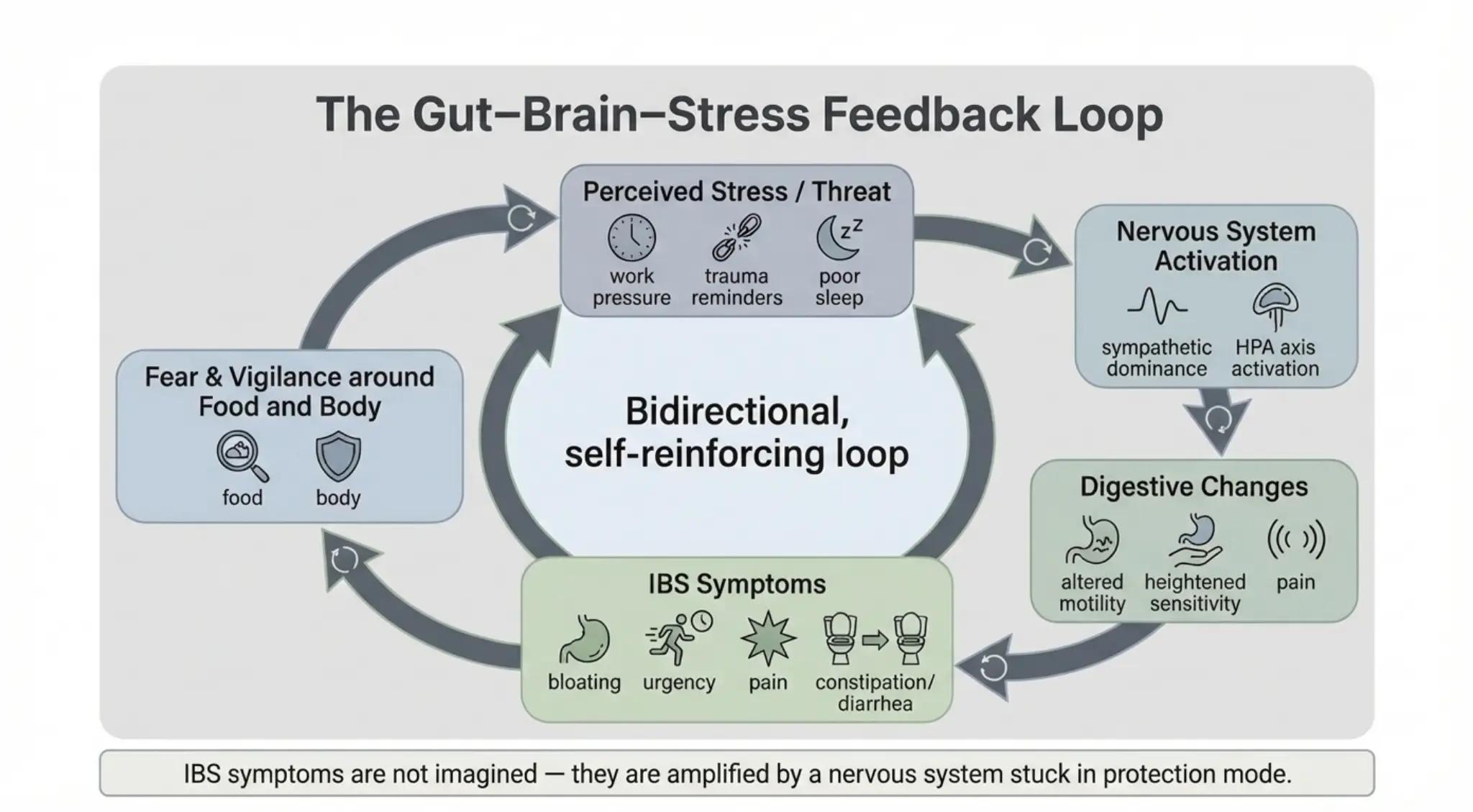
However, if we’re brutally practical, the question of which comes first isn’t always all that important, because once both are present, they create an effective loop: symptoms increase restriction, restriction increases anxiety, anxiety increases symptoms… in the end you feel you need to restrict more and more just to survive.
Food avoidance: completely understandable, increasingly dangerous
When you understand what IBS actually feels like (severe bloating, urgent and unpredictable trips to the toilet, constipation, diarrhoea, pain, gas that could clear a room), it makes complete sense that people start connecting symptoms to food. Eating is often the most recent thing that happened before the symptoms hit, so the brain draws the obvious conclusion.
So people start eliminating. First the obvious suspects, then a few more, then a few more after those. This gets even worse once you do a bit of Googling and find the FODMAP diet (raise hands if you’ve done a bit of Googling, or “AI:ing”, for a problem you have. Yeah, same here). Once you do, “all carbs are bad” becomes a very easy, though wrong and extreme, conclusion.
According to research, more than 60% of IBS patients have already independently limited or excluded foods before seeing a gastroenterologist.19 Unfortunately, restricting your diet because of fear can be very stressful and can really limit your social life – especially when it becomes a habit. I saw this quite often with my own clients and, for some, it was one of the hardest things to change.
Now, there are legitimate reasons for restricting your diet, but structured elimination diets are easy to overdo if you do not know what you are doing, and people can end up holding onto the restrictive phase for far too long. For example, the low-FODMAP diet (one of the better-supported dietary approaches for IBS) is meant to move through restriction, reintroduction and personalisation. Not a “goodbye carbs, spices, and everything I love” forever.7, 20, 21
You see, long-term restriction doesn’t just affect calories. It can reduce food variety, lower nutrient intake, make social eating harder, and in some people the restriction becomes a serious problem of its own. A low-FODMAP diet can also change the bacteria living in your gut, including reducing some Bifidobacteria, though we still don’t know what that means for long-term health. And, ironically enough, the fear and stress around eating can themselves feed (hah! Sorry, couldn’t resist) IBS symptoms, which then seem to confirm that the restriction was the right call.7, 8, 9, 21, 22
At its worst, you end up in a situation where you either eat too little and avoid the horrible symptoms, or you eat normally and suffer. Most people eventually find some kind of a balance, but in some cases there isn’t any clear food to restrict at all. This is what happened to me, when my doctors told me to “avoid foods that annoy your stomach.” All foods annoyed me. In cases like that, people tend to either panic their way into eating almost nothing, or think “sod it all” and just eat in pain. Neither is a liveable balance, nor does it have to be the permanent state of affairs.
So is food actually the problem?
Food can genuinely provoke IBS symptoms and dietary changes can provide real relief, especially in the short term. So no, this is not me saying “just relax and eat beans”. That would be both unhelpful and, depending on the room, socially catastrophic. I get to make this joke because, at my worst, people around me quite literally did not want to be around me.
But IBS is rarely just a food problem – after all, your gut works together with your brain, the bacteria living in the gut, stress, and food can all affect what happens.9, 16, 21, 25
As for the effects of stress, what’s important to understand is that stress doesn’t just trigger symptoms in people who already have IBS. For many people it seems to have been there at the beginning. Almost every client I’ve worked with can trace the start of their IBS to a period of sustained stress, a major life change, an illness, or a difficult childhood. Research has also found IBS more often in adults who went through significant adversity or trauma as children, though the effects vary according to different studies.9, 26, 27, 28
This is also why focusing only on what you eat can leave a large part of the problem unaddressed.
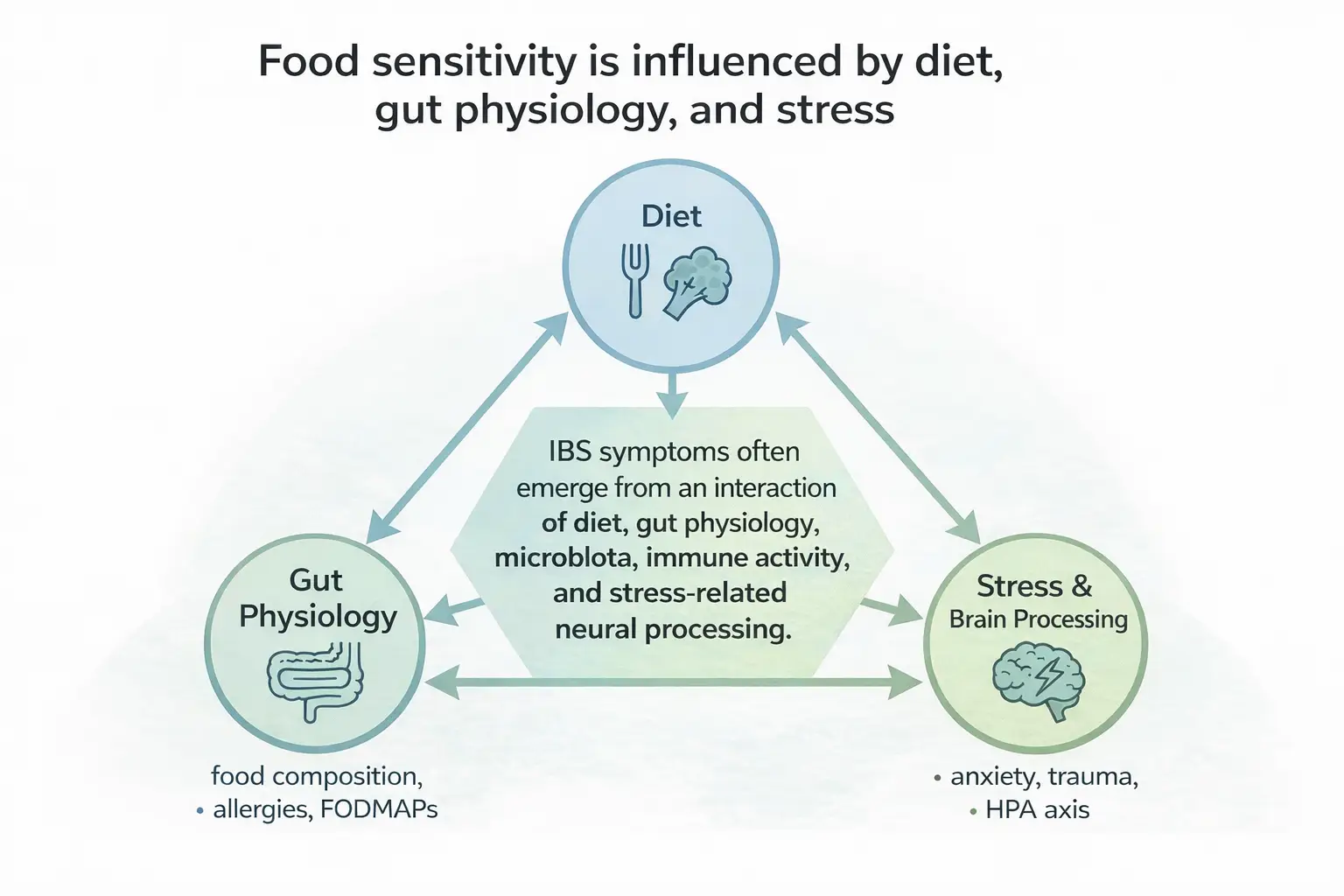
So, how exactly does stress actually affect your stomach? Well, part of it has to do with the HPA axis (the hypothalamic-pituitary-adrenal system – dunno if that actually helped you, but you’re welcome), which is one of the systems involved in the body’s stress response. Repeated or prolonged stress may change how reactive these systems become. “But, Kevin, HOW does this happen?!” Going very deeply into it would take another few articles, but one important route is the autonomic nervous system, including the vagus nerve. The vagus helps the brain and digestive tract communicate and helps regulate things such as stomach and upper-gut motility and secretion. Stress does not make the vagus choose “diarrhoea” or “constipation”, but stress can change gut motility, which is one reason digestion can speed up, slow down, or simply feel much quicker to react. After all, if a tiger is running after you, digesting lunch is not exactly the body’s main priority (you can think of this as a choice between “deal with the stressor” or digest).9, 29, 30
The cultural side of food fear
It’s also worth talking about something that rarely gets discussed in IBS circles: how our cultures and social norms affect our views about our bodies. I strongly feel that eating disorders are very much a by-product of a mixture of teasing, thoughtless comments from adults, fashion magazines, social media, and the toys we hand children. There is also some science to back this up, such as research linking bullying and teasing with eating disorders, experiments showing that exposure to Barbie images can affect how young girls feel about their bodies, evidence that idealised body images can worsen body image, and research finding that social comparison on social media is associated with worse body image and eating-disorder symptoms.31, 32, 33, 34
This matters for IBS because parents who struggle with eating disorders, disordered eating, body shame, or fear around food can, through their own behaviour and language around food, pass some of those patterns on to children, often unintentionally. That does not mean parents are to blame, but children learn from emotions and words around them.
To combat this, I think we need schools to teach emotion regulation and empathy, families to have honest conversations about body image, and a society that is more accepting of differences.
What actually produces lasting improvement
Okay, so now you know food isn’t the whole story… but what do you actually do with that information? You look at the whole – your entire life.
And I’ve seen the same basic thing again and again: people sleep better, get less stressed, deal with some of the emotional things they’ve held onto, become less afraid of food… and their stomach often starts calming down too. Not always completely, and not always evenly, but the change is still usually very clear. And a lot of this is backed by science too.7, 9, 23, 35
And this is not just something I have seen with clients. Psychological therapies have actually been studied for IBS too. Cognitive behavioural therapy, hypnotherapy, multicomponent psychological therapy, and dynamic psychotherapy have all shown benefit compared with control therapy or usual management. Of course that does not mean that talking about it a few times creates magical changes. What it does mean, though, is that working with the brain, and the nervous system as a whole, can be very effective for IBS.35, 36
In my own work, I use schema-based methods (essentially dealing with childhood issues through visualisations), EFT (Emotional Freedom Techniques), sleep work, and lifestyle changes. I use them because they help me work with the stress, old emotional issues and reactions that I often see making the IBS worse. We also know that anxiety, low mood and stress are strongly connected with IBS.9, 10, 23 That doesn’t mean my exact combination has been studied as an IBS treatment, mind you. It’s simply why I think those areas are worth paying attention to, and my own and my client experiences have definitely supported that.
How to actually move forward with food
If someone with IBS has begun restricting their eating regularly, reintroducing foods becomes important at some point, because otherwise they risk not getting enough protein, fibre, healthy fats, vitamins and minerals, and the list of “safe” foods can keep getting smaller. Reintroducing foods can also help stop fear from becoming the main thing deciding what you eat. That said, it needs to be done carefully. With low-FODMAP, you’re actually supposed to bring foods back in and work out what really causes problems for you and what was just a temporary reaction.7, 8, 20 Some people find cooked vegetables easier to tolerate than raw ones, so that can be a gentler place to start if it matches your own experience. (Though as a general point, please don’t attempt to eat raw potatoes. That’s a separate problem entirely, and not a fun one.)
If there’s an active eating disorder alongside the IBS, or if someone is losing weight, panicking around food, needing supplements, avoiding social eating, or living on a tiny list of “safe” foods, I wouldn’t suggest doing this alone. Get a registered dietitian involved, and if there’s an eating disorder too, ideally an eating-disorder therapist as well.7, 8, 19
And if a reintroduction goes badly, that does not always mean the food is off the table (hah! Table – get it?) forever. Let your stomach settle before trying it again, because you want as few other things muddying the result as possible.20, 24 I would also do it when you’re feeling really calm, because stress itself can affect IBS symptoms and gut motility.9 Start with a controlled amount and increase it gradually rather than immediately eating a huge portion.20
What clients say
You’ve read this far, so you obviously care about the science, but science doesn’t always tell you what changes really look like for people.
Below are three clients I’ve worked with. While their symptoms were different, they all had experienced daily food restriction. All three also improved while we were working on both their everyday habits and the psychological side of things.
Maria — 8 sessions over 4 months
“My gut was really sensitive at first and reacted strongly to changes. Now, it’s almost back to normal, and I can eat foods I couldn’t before. Working with Kevin has been a breeze. He’s easy to talk to, and we’ve had plenty of laughs. I’ve gained a lot of insight into my mindset and behaviour, especially as we’ve worked through my childhood traumas.”
Tanja — 8 sessions over 4 months
“My sleep has improved tremendously and my IBS is remarkably calm. Kevin knows how to make clients feel safe even when dealing with extremely difficult topics, which is key when working with trauma.”
Ville — 5 sessions over 6 months
“The biggest thing I’ve learned with Kevin is how to manage stress. He also gave great advice on supplements and eating. Now if I eat something my stomach doesn’t like, it is fine in just a day. Before it took up to even 4 days to calm down. I really like how Kevin’s coaching isn’t all super serious, even though it’s definitely professional.”
You can read these and more testimonials here.
In summary
| What research shows | What this often means for people |
|---|---|
| IBS often reacts to stress | Symptoms can worsen during periods of emotional overload, not just after meals |
| Food triggers are individual and need proper testing | One rough reaction does not prove permanent intolerance; structured reintroduction helps identify repeatable triggers |
| Severe restriction can create new problems | Short-term symptom relief can come at the cost of food variety, nutrition, social eating and increasing fear around food |
| Psychological therapies can help IBS | Approaches such as CBT and hypnotherapy have evidence, while other approaches are still being studied |
| IBS and eating disorders can influence one another | Symptoms can drive restriction, while restrictive or maladaptive eating can also be part of the pathway towards later IBS |
| Early adversity is associated with higher odds of IBS in adulthood | It may be one contributor to later gut-brain vulnerability, but it does not prove the cause of any one person’s IBS |
I’ve been through severe IBS myself, including years of restricting what I ate, so I know how much it can take over your life. If you want to talk about your own situation, you can reach me here:
References and further reading
- Galmiche, M., Déchelotte, P., Lambert, G., & Tavolacci, M. P. (2019). Prevalence of eating disorders over the 2000–2018 period: a systematic literature review. The American Journal of Clinical Nutrition, 109(5), 1402–1413. SourceReferenced above: 1, 2
- Oka, P., Parr, H., Barberio, B., Black, C. J., Savarino, E. V., & Ford, A. C. (2020). Global prevalence of irritable bowel syndrome according to Rome III or IV criteria: a systematic review and meta-analysis. The Lancet Gastroenterology & Hepatology. SourceReferenced above: 1, 2
- Kim, Y. S., & Kim, N. (2018). Sex-Gender Differences in Irritable Bowel Syndrome. Journal of Neurogastroenterology and Motility, 24(4), 544–558. SourceReferenced above: 1
- Hanel, V., Schalla, M. A., & Stengel, A. (2021). Irritable bowel syndrome and functional dyspepsia in patients with eating disorders: a systematic review. European Eating Disorders Review. SourceReferenced above: 1, 2
- Perkins, S. J., Keville, S., Schmidt, U., & Chalder, T. (2005). Eating disorders and irritable bowel syndrome: is there a link? Journal of Psychosomatic Research, 59(2), 57–64. SourceReferenced above: 1, 2, 3
- Yang, K., Kwon, S., Burton-Murray, H., Kuo, B., Chan, A. T., Field, A. E., & Staller, K. (2024). Maladaptive weight control and eating behaviours in female adolescents/young adults are associated with increased risk of irritable bowel syndrome in adulthood: Results from the Growing Up Today Study. Alimentary Pharmacology & Therapeutics. SourceReferenced above: 1, 2
- Harer, K. N. (2019). Irritable Bowel Syndrome, Disordered Eating, and Eating Disorders. Gastroenterology & Hepatology, 15(5), 280–282. SourceReferenced above: 1, 2, 3, 4, 5, 6, 7, 8, 9, 10, 11, 12
- Burton Murray, H., & Staller, K. (2022). When Food Moves From Friend to Foe: Why Avoidant/Restrictive Food Intake Matters in Irritable Bowel Syndrome. Clinical Gastroenterology and Hepatology. SourceReferenced above: 1, 2, 3, 4, 5, 6, 7, 8
- Qin, H.-Y., Cheng, C.-W., Tang, X.-D., & Bian, Z.-X. (2014). Impact of psychological stress on irritable bowel syndrome. World Journal of Gastroenterology, 20(39), 14126–14131. SourceReferenced above: 1, 2, 3, 4, 5, 6, 7, 8, 9, 10, 11, 12
- Mulianda, C. A., Murti, B., & Prasetya, H. (2023). Associations between Anxiety, Depression, and Poor Quality of Sleep on the Risk of Irritable Bowel Syndrome: A Meta-Analysis. Journal of Epidemiology and Public Health. SourceReferenced above: 1, 2, 3
- Boyd, C., Abraham, S., & Kellow, J. (2005). Psychological features are important predictors of functional gastrointestinal disorders in patients with eating disorders. Scandinavian Journal of Gastroenterology, 40(8), 929–935. SourceReferenced above: 1
- Carpinelli, L., Savarese, G., Pascale, B., Milano, W. D., & Iovino, P. (2023). Gut–Brain Interaction Disorders and Anorexia Nervosa: Psychopathological Asset, Disgust, and Gastrointestinal Symptoms. Nutrients. SourceReferenced above: 1
- National Institute for Health and Care Excellence (NICE). (2008; updated 2017). Irritable bowel syndrome in adults: diagnosis and management (CG61). SourceReferenced above: 1
- Spillebout, A., Déchelotte, P., Ladner, J., & Tavolacci, M. P. (2019). Mental health among university students with eating disorders and irritable bowel syndrome in France. Revue d’Épidémiologie et de Santé Publique. SourceReferenced above: 1, 2
- Reed-Knight, B., Squires, M., Chitkara, D. K., & van Tilburg, M. A. L. (2016). Adolescents with irritable bowel syndrome report increased eating-associated symptoms, changes in dietary composition, and altered eating behaviors. Neurogastroenterology & Motility. SourceReferenced above: 1
- Padhy, S. K., Sahoo, S., Mahajan, S., & Sinha, S. K. (2015). Irritable bowel syndrome: Is it “irritable brain” or “irritable bowel”? Journal of Neurosciences in Rural Practice, 6(4), 568–577. SourceReferenced above: 1, 2, 3
- Almeida, M. N., Atkins, M., Garcia-Fischer, I., Weeks, I. E., Silvernale, C. J., Samad, A., Rao, F., Burton-Murray, H., & Staller, K. (2024). Gastrointestinal diagnoses in patients with eating disorders: A retrospective cohort study 2010–2020. Neurogastroenterology & Motility. SourceReferenced above: 1
- National Institute for Health and Care Excellence (NICE). (2017; updated 2020). Eating disorders: recognition and treatment (NG69). SourceReferenced above: 1
- Bellini, M., & Rossi, A. (2018). Is a low FODMAP diet dangerous? Techniques in Coloproctology. SourceReferenced above: 1, 2, 3
- Whelan, K., Martin, L. D., Staudacher, H. M., & Lomer, M. C. E. (2018). The low FODMAP diet in the management of irritable bowel syndrome: an evidence-based review of FODMAP restriction, reintroduction and personalisation in clinical practice. Journal of Human Nutrition and Dietetics, 31(2), 239–255. SourceReferenced above: 1, 2, 3, 4, 5, 6
- Staudacher, H. M., & Whelan, K. (2017). The low FODMAP diet: recent advances in understanding its mechanisms and efficacy in IBS. Gut. SourceReferenced above: 1, 2, 3
- Staudacher, H. M., & Whelan, K. (2016). Altered gastrointestinal microbiota in irritable bowel syndrome and its modification by diet: probiotics, prebiotics and the low FODMAP diet. Proceedings of the Nutrition Society. SourceReferenced above: 1
- Sibelli, A., Chalder, T., Everitt, H., Chilcot, J., & Moss-Morris, R. (2018). Positive and negative affect mediate the bidirectional relationship between emotional processing and symptom severity and impact in irritable bowel syndrome. Journal of Psychosomatic Research. SourceReferenced above: 1, 2
- Van den Houte, K., Colomier, E., Routhiaux, K., et al. (2024). Efficacy and Findings of a Blinded Randomized Reintroduction Phase for the Low FODMAP Diet in Irritable Bowel Syndrome. Gastroenterology, 167(2), 333–342. SourceReferenced above: 1, 2
- Ng, Q. X., Yau, C. E., Yaow, C. Y. L., Chong, R. I. H., Chong, N. Z.-Y., Teoh, S. E., Lim, Y. L., Soh, A. Y. S., Ng, W. K., & Thumboo, J. (2023). What Has Longitudinal ‘Omics’ Studies Taught Us about Irritable Bowel Syndrome? A Systematic Review. Metabolites. SourceReferenced above: 1
- Park, S. H., Videlock, E. J., Shih, W., Presson, A. P., Mayer, E. A., & Chang, L. (2016). Adverse childhood experiences are associated with irritable bowel syndrome and gastrointestinal symptom severity. Neurogastroenterology & Motility. SourceReferenced above: 1, 2
- Lenover Moyer, M. B., Jasani, K., Waldman, A. B., Chinchilli, V. M., & Shenk, M. K. (2025). The Developmental Origins of Irritable Bowel Syndrome: A Systematic Review and Meta-Analysis. American Journal of Human Biology. SourceReferenced above: 1, 2
- Afari, N., Ahumada, S. M., Wright, L. J., Mostoufi, S., Golnari, G., Reis, V., & Cuneo, J. G. (2014). Psychological Trauma and Functional Somatic Syndromes: A Systematic Review and Meta-Analysis. Psychosomatic Medicine. SourceReferenced above: 1, 2
- Zhou, G. Q., Huang, M. J., Yu, X., Zhang, N. N., Tao, S., & Zhang, M. (2023). Early life adverse exposures in irritable bowel syndrome: new insights and opportunities. Frontiers in Pediatrics. SourceReferenced above: 1, 2
- Browning, K. N., & Travagli, R. A. (2019). Central control of gastrointestinal motility. Current Opinion in Endocrinology, Diabetes and Obesity, 26(1), 11–16. SourceReferenced above: 1
- Lie, S. Ø., Rø, Ø., & Bang, L. (2019). Is bullying and teasing associated with eating disorders? A systematic review and meta-analysis. International Journal of Eating Disorders, 52(5), 497–514. SourceReferenced above: 1
- Dittmar, H., Halliwell, E., & Ive, S. (2006). Does Barbie make girls want to be thin? The effect of experimental exposure to images of dolls on the body image of 5- to 8-year-old girls. Developmental Psychology, 42(2), 283–292. SourceReferenced above: 1
- Hausenblas, H. A., Campbell, A., Menzel, J. E., Doughty, J., Levine, M., & Thompson, J. K. (2013). Media effects of experimental presentation of the ideal physique on eating disorder symptoms: A meta-analysis of laboratory studies. Clinical Psychology Review, 33(1), 168–181. SourceReferenced above: 1
- Bonfanti, R. C., Melchiori, F., Teti, A., Albano, G., Raffard, S., Rodgers, R., & Lo Coco, G. (2025). The association between social comparison in social media, body image concerns and eating disorder symptoms: A systematic review and meta-analysis. Body Image, 52, 101841. SourceReferenced above: 1
- Shafiei, F., Dehghani, M., Fathali Lavasani, F., Manouchehri, M., & Mokhtare, M. (2024). Intensive short-term dynamic psychotherapy for irritable bowel syndrome: a randomized controlled trial examining improvements in emotion regulation, defense mechanisms, quality of life, and IBS symptoms. Frontiers in Psychology. SourceReferenced above: 1, 2, 3
- Ford, A. C., Quigley, E. M. M., Lacy, B. E., Lembo, A. J., Saito, Y. A., Schiller, L. R., Soffer, E. E., Spiegel, B. M. R., & Moayyedi, P. (2014). Effect of Antidepressants and Psychological Therapies, Including Hypnotherapy, in Irritable Bowel Syndrome: Systematic Review and Meta-Analysis. American Journal of Gastroenterology. SourceReferenced above: 1, 2
- Horn, A., Stangl, S., Parisi, S., Bauer, N., Roll, J., Löffler, C., Gágyor, I., Haas, K., Heuschmann, P. U., Langhorst, J., & Keil, T. (2023). Systematic review with meta-analysis: Stress-management interventions for patients with irritable bowel syndrome. Stress and Health. SourceReferenced above: 1